SOCIAL MEDIA

Monday, January 11, 2021

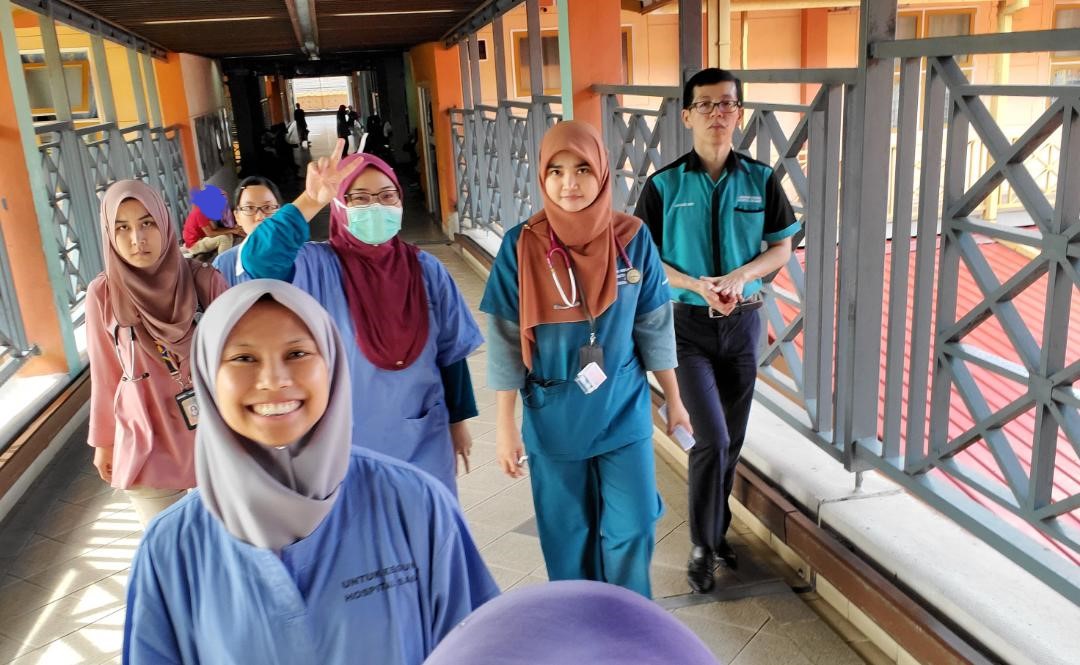
Hectic ICU Pool

Assalammualaikum.
 
In my workplace, we pool the medical officers into OT pool and ICU pool. As the name implies, one pool of doctors will only work in OT and its related services for example pre op assessment clinic, pre op assessment in ward. The other pool works in the ICU, and takes care of all the other critically ill patients in the ward, and sometimes ED. 

New doctors will usually spend a few months in OT before being allowed to enter the ICU pool, as it is a tougher, and more demanding job. Perhaps because I am a Masters student, or because we really don't have enough manpower, I was put in the ICU pool in January - my second month here. That is a real fast-track. 

For that reason, during the first long weekend of January, I wasn't oncall. They can't have a totally new (to the system) doctor to be oncall on a weekend.  Hence I had the 3 solid days to myself, and even went to GH Premium Outlet!
Little did I know, that was the calm before the storm. 

My first day in ICU pool - ie 4th Jan was a nightmare and it demotivated me so much I started to consider if this is really the path I want to take. I've never felt this way before, not even when things were crazy back in HO time and during my time in the district hospital before. 

The situation was way worse because of the current COVID situation. We are not supposed to take care of COVID patients - in fact, we weren't prepared for it. But things have gotten so bad that we are suddenly faced with so many critically ill COVID patients in our hospital. My bosses were very busy setting up the ICU to cater for COVID and PUI patients - things change on a whim, so many new instructions and guidelines being posted in our WhatsApp group, I can't catch up with them. To make things worse, many of my colleagues in ICU pool had to be quarantined, hence the workload increased tremendously for all of us who are not. 

This is a COVID patient's x-ray. This is bad, nearly no normal lung tissues. 

I had to reintubate two patients that morning - 1 COVID positive, and 1 PUI. I was blessed with a chill and calm Specialist. He guided me well, considering the fact I have never worn the PAPR (that spaceman suit), as I've always used a different kind of protective gear in my previous hospital. The reintubation went smoothly but it delayed my work for the rest of the day. 
I missed my lunch, had some leftover mushroom soup and biscuit at 3.30pm while my colleagues were busy moving things out of our on-call room to be put in a new ad-hoc room. I went home two hours later than usual, and by the time I reach home, I started to have a migraine, was exhausted and famished. 

Things were a little bit better on Tuesday since there was no reintubation hence I had enough time to settle all the work. But we have more and more ill COVID positive patients. I still went back later than usual. And no, we cannot claim overtime - no such thing in our profession. 

I was on-call on Wednesday, took care of all the critically ill patients OUTSIDE the ICU - had only two hours rest within the 24 hours and unable to keep my eyes open during the drive home. It was dangerous but I didn't have another option. I can't sleep in the hospital as they are limiting the nos of people in the room, and there is no place for me to sleep midway since my house is <15km from the hospital. Thursday was a rest day, I woke up nearing 3pm, hungry.

Friday was hectic too, as it was my first day in the newly transformed ICU. I struggled to remember all the details of the patients - their culture results, blood results, antibiotics, and plan. 

Oncall again on Saturday, this time in charge of INSIDE the ICU. This was by far the worst day of the week. I cried silently underneath my N95 - overwhelmed and overstretched. Tears and sweat mixed together beneath the mask and the face shield as I looked out the window, trying to recollect myself. It was 3pm, I had so many works undone, rounds have just finished, I felt inadequate because I didn't know the in and out details of all the patients hence the round was longer than usual, I have not had my lunch, the air conditioner was switched off, it was freaking hot in the PPE. I've not had a single drop of water since 9am and one of my COVID patients was scheduled for a scan and I was supposed to accompany the patient down to the CT suite which will easily take another hour. The nurses were pressuring me to order meds, blood investigations from the system (only doctors can do this online), everyone was tired and exhausted, politeness is at the bare minimum. So I broke down. 

But Allah was with me the whole time. My Specialist (who was already outside at that time), realised the trouble I was in, and instructed another colleague of mine to accompany the patient to Radiology. I managed to go out at 4pm, had my shower, gulped down litres of water in one go, and had a quick lunch, before going back into the ICU at 6.30pm. One of my patient passed away that day, it broke my heart to inform his son that the patient was dying and no one is allowed to come and pay their visit in his last hours. The patient only had the nurses to be with him during his last moments. 

Sunday is another much-needed post-call rest day - managed to cook dinner and prepare my next week's BuJo spread sheet. 
 
I didn't realise I was showing signs of exhaustion but my husband noticed that I obviously look very drained this one week compared to the 3 weeks in OT pool in December where I was very bubbly and active. He even brought me out to Secret Recipe on Friday for some cheering up before my on-call. 

I keep a log of the patients I see, and to my surprise, I encountered a total of 41 patients in the 3 weeks in OT pool in Dec, but within this first week of January, I have already encountered 43 patients. That is a quantitative measure of the workload we are facing, taking care of the ills in the hospital. No wonder I was on the brink of collapsing. 

Hoping For The Best

Every day, I shudder to see the number of patients in ICU and ventilated patients released by the MKN - they just keep increasing. I hope things will be better soon, please all adhere to SOPs, stay home if no important issues outside, and don't go back to visit your elderly parent yet. If you love them, protect them. Despite seeing my mother every day, I can't remember the last time I actually touched her - salam / hug her. I was too scared of passing the virus to her. She's asthmatic and diabetic - I don't think I can keep calm if she's ever infected. 

Let's all do our part and pray for the best.

'til then.

Akmar


Tuesday, December 8, 2020

The (TRUE) First Day of Work

Assalammualaikum! 


Today is my real first day of work, since yesterday the closest and the only time I got to a patient was manually bagging a child while my new colleague gas him to sleep. I spent the first half of the day mostly by waiting; waiting for the admin clerk, wait for them again, then again. Then waited to see the consultant in charge of us, then a bit at the ICT department, then a bit longer at the Security Unit to get our ID card done (yep, they took pic there and then and yep also, as predicted - I didn't look like how I pictured myself smiling to the camera)

| Today |

I was in charge of E2 today ie the Emergency OT mainly for Orthopaedics cases. Lawak gler, I didn't know the semi-e case that my colleagues posted in the WhatsApp grp yesterday was meant to be my first case this morning. So I kinda ignored the patient, and the Sp at the patient's bed! 
She called me to give plan about the patient, I didn't even know she is my Specialist; hence I almost did not want to come to her. Then she introduced herself, and I smacked myself in my brain. Nasib baik dia tak garang. 

So my first and ONLY case was an acetabular fracture plating. Quite straightforward case - not much bleeding, the Sp induced with me and she allowed the HO to intubate with me standing by. 
After that, even though we had a long list, none can be called because all COVID RTKs were still pending 😑

| Premed |

After lunch and Zuhr, I went for premed. I had to premed only two surgical patients; but was delayed because 1) No OTMS yet, and 2) Deym Purple Code.
Purple Code is the code activated during the transfer of a positive COVID patient - hence the whole corridor needed to be cleared off staff and patients and visitors. So I was trapped and cannot go to the ward I wanted to. 

Only two patients; but I already feel very exhausted by the end of it. I think I am getting old (myself 10 years from now will snort at this remark. Kalau hidup lagi la)

| Balik Rumah |

It took me about 25mins only to reach home, including the time taken to refuel my car. Not bad eh? The jam has not started when I leave hence the short travel time. 
Tapi sampai rumah je, I felt so sleepy, I feel like going to sleep. 
Gone, gone is my plan to study. Even now, I am supposed to be studying but instead, I am writing my blog 😒

So I am ending this now, gotta go wash my face and kunun-kunun do the 100 Korean skin care steps and sleep early to go to work tomorrow. 


-Because life is a test- 

 -AkMaR- 

Saturday, December 5, 2020

Starting Work in Two Days Time, Oh The Anxiety!

Assalammualaikum!

I've only been able to properly sit down in front of a computer past one week or so, hence the long hiatus. 
Before entering Masters programme, we need to clear off our annual leaves, since we are technically leaving KKM and entering KPM hence our KKM annual leaves cant be used anymore. 

I had 26 days left, used 22 of them and took the last 3 weeks of November off.
My last day of working was 4th Nov! 

I'm gonna leave the whole story of my moving into KL and renovating and decorating the house in another post and focus on my work in this. 

My new work/study spot! No I didn't bother tidying them up for the photo because I'm lazy liddat. 

My uni intake was on the 1st of Dec so I thought I will start working in my training hospital on either the 1st or 2nd. But boy was I wrong. The university orientation programme took the whole week, but the best thing is, they are all done online!

So it's a first of Work-From-Home experience for me. Mana ada (clinical) doktor yang can WFH, cannot touch-touch patient through screen ma. Too bad Akmal's were online only for the first session. All the subsequent sessions required him to go to the university hospital (Don't tell him but I suspect his programme coordinator is a typical boomer, because he actually had to go there to JOIN the ZOOM meeting while students from other programme stays home. Blergh, and weird!)

So my first day in the hospital is this coming Monday, Dec 7th.
And I was added into the roster request WA group since mid-Nov! Bapak scary. 
And I'm gonna be oncall on the 10th, that's only like my 4th day in the hospital! 

| THE ANXIETY |


I'm so anxious to resume work after one month, dh la tu in a new environment, with a different title plk tu - "Masters Student".
Scary weyh, nanti org expect kau tau but you don't. Nanti kena tempelak or sarcasm camne?
Or what if they expect so low of me because I come from a small district hospital? 

One of my dear friend advised me, and I am going to heed this, 

"Doa byk2
Psycho diri ko 1st yr ni memang susah
Org look down
Byk benda xtaw
Expect the worst "

Mcm scary kan advise dia?
But I think I have to hold on to that now. 

I am scared dapat big case and I can't handle it. 
I've never done AAA open repair in my prev hospital, we wheel them off to the nearest tertiary centre. 
I've never used the Level-1 blood transfusion machine before. 
I am not that efficient in TIVA yet. I've never done anaesthesia for respi procedures before. 
What if I get these types of cases and I can't handle them on my own? 

"Apa kau belajar kt district ni?"
- Agak2 will I get this kind of insensitive, derogatory remark?

Akmal said, "Lek lek dlu awal2 ni. Jangan perform sangat. Nanti kalau perform awal2 ni, lepas ni merudum camne? Buat bodo2 dlu, lepas tu baru perform"

Ha amek, that's from a man's point of view. Lek lek dlu~

Ok, I think I rant enough for the day. 
I am hoping to read this back sometime in the future and laugh at myself, just like how I laughed (but completely still resonate with) at my pre-HO anxiety. 

 -Because life is a test- 

 
Thursday, September 24, 2020

My First Awake Fibre-Optic Intubation

Assalammualaikum!
I came home two days ago super thrilled! Can't even wait till we get to the diner before blurting everything out to Akmal once I got into the car. 

Excited sgt, belanja gmbr Captain Ri satu.

There was a patient scheduled for an emergency operation and he was 180kg!
He very likeyly has severe OSA based on his STOPBANG score and that itself is a big big risk for intubation and general anaesthesia.

Dr Rey was there and she decided for Awake FibreOptic Intubation (AFOI), I was actually manning the OR next door when I peeped into the OR at the right time and was offered to do the AFOI instead!
Non-anaesthesia trainee might not know this but awake fibre-optic intubation is a very important, advanced airway skills that we must have. I've observed it multiple times before but never did it myself. I've even paid hundreds of ringgits late last year for the Beyond Basic Airway course and already practised multiple times on mannequins but never on an awake human being. 

The procedure requires us to insert the endotracheal tube into the patient's airway while the patient is AWAKE and mildly sedated and instead of using laryngoscopes and our bare hands, we use a fibreoptic scope with camera attached. We insert the scope into the patient's nose or mouth (in my case, it was the nose) and manipulate the end of the scope to slide down the patient's throat, into the major airways until we see the carina ie where the trachea diverges into two. 

A random picture of AFOI I found on the Internet. A still cut of a [YouTube video]

I had my first CVL a few weeks before I left the hospital I completed my housemanship, my first CSE a few weeks after starting in this hospital and my first AFOI not long before I leave this hospital for my Masters study. Isn't this just great?

I wish I can master this AFOI skills soon. 
Masters life, please be nice to me. 

-Because life is a test-


Tuesday, September 22, 2020

KL, I'm coming Home!

Nti akan rindu dorg ni. Team ICU Raya; Kak Salmi, Anis, Kak Kama, Sharmine and Me

Assalammualaikum.
Alhamdulillah alhamdulillah. 
I got accepted into MMed Anaes ie the Masters programme for Anaesthesiology ie a 4-year programme to be a Specialist. So in December, I can add "Anaesthetist in the making" in my profile section 😋

The exam was last December, and the result was supposed to be released in April and intake in June. However, due to the COVID disruption, they postponed the intake and released the results in July, for December intake. My husband got in too! I was offered UM and him UKM. Alhamdulillah, both of us in Klang Valley and no LDR involved 😁 

And I am thrilled that I will be moving back to KL. 
I am a KL girl, no doubt.
I like it here in this small town, people are friendly, roads are not busy and most of the necessities are near. But I never realised how much I missed KL until now. 
I want to find all those libraries again, study in an open space again and shop at big complexes again.
The catch? Well, I'll be spending more (read: saving less) and the traffic!

I remember being super excited when I graduated Med School, so optimistic about the future as a doctor, and telling everyone "Heyyy I am a doctor!". Then I started my gruesome housemanship, saw my juniors convocation pictures; them being super excited being able to call themselves doctor and told myself, "Haaahaha, korg igt dh grad means akan jadi doktor ke? Tggu la, korg belum rasa lagi "kedoktoran" yg sebenar"

Then I finished my HO-ship and was super excited yeayyay dh jadi MO. 
4 years down the line, then tgk my juniors2 plk excited jadi MO - and thought to myself Haaahaha dlu aku excited camtu jugak. Junior MO belum apa2 lagi, jgn meroyan sgt. 

So now I am excited that I am accepted into this programme, tapi mesti bila dh bertahun2 nti, insyaAllah if ada panjang umur utk baca balik blog ni, mesti mcm "Haaaahaa excited giler dlu eh. Tak sedor struggle nye macam mana buat Masters ni"

So yes, that's why sekarang ni mcm nak excited giler but tak berani, kena control skit. 
Ok and I realised this post is so rojak already but biar lah. 

Registration in December, and now bosses dh start tanya "Akmar dh start study?"
Ayat Dr John lagi la, "One year tak ckup nk study, and you only have two months extra. U should start study now. I finished West Respi book 3 times even before I msuk Masters"
#terusrasainadequate

Argh stress.
Tak habis2 kena study. 

-Because life is a test-
Wednesday, April 1, 2020

Crazy Covid

Assalammualaikum.


A very short entry today.
I've been very busy since Covid pandemic.
We are going full force, getting ready for the third wave.
And donning doffings to attend PUI patients are no joke.

I sweat litres every day, gulped down 500mls water in one go and still does not PU as often.
I don't have time to read people's blogs, what more sit down and write my own.

Let's all pray all of us come out of this war unscathed 💪🙏

#stayhome
#staysafe


Lots of love,
Akmar
Monday, February 10, 2020

ICU Oncall Diary

Assalamualaikum.

Disclaimer: This post is going to be very medical-jargons studded. It's my MO Diary anyway. 😆😆

Nisaq, Insyirah, Me, Diana on our way back from peri rounds. 

Yesterday I had a tiring ICU call.

My First Lumbar Puncture


I did a lumbar puncture for a suspected meningoencephalitis patient and truth be told, this is the first time I performed a lumbar puncture for a non-surgical patient.

Yes, I can do spinal anaesthesia with one eye closed, and anatomically spinal anaesthesia and a lumbar puncture are the exact same thing.
But for spinal anaesthesia, the patient is sitting up straight and I have the luxury of it being in a controlled situation although at times I really need to be quick (eg in fetal distress cases) while in a lumbar puncture, patients are in the lateral position (imagine lying down by your side, cuddling your own knees). Obviously, the challenges are different.

I attempted twice at the lumbar puncture - first using the 22G Spinocan that the Medical team already has. I can't feel the give classically described as I pierce the layers using the Spinocan hence I requested the Pencan needle I've always used from the OT.

I succeeded in my first attempt with Pencan; but since the needle diameter is smaller ie 27G; the Medical MO had to stay longer to collect adequate CSF samples into small bottles to send to the lab. Haks, sorry pal.

The Difficult Ventilation Patient


My first referral of the day was at around 4.30pm.
It was a gentleman with severe pneumonia; and the ED instead of the usual Medical team referred him to me. They could not ventilate the patient - that shows just how bad the lungs were. The highest saturation was only 93% despite 100% oxygen.

We brought the patient into ICU and then my nightmare started. It was so difficult to maintain his saturation - this basically means the lung condition is so bad that we have to tailor our machine to give such high pressure to make sure adequate oxygen reaches his lungs so that it can then go into his brain, heart, and kidney. If we can't oxygenate him, we worry about the effects on his brain. He might not be able to wake up even if he survives this ordeal.

I did not sleep at night, kept requesting for ABGs, listening to his lungs, monitoring his urine output and cracking my brain on what to do. While fighting my tiredness and sleepiness at night, I then remembered my night houseman. Anaesthesia don't have many house officers and consequently, they are not available all the time. Sometimes when they are on leave, post night, etc, only the MOs are working and we are okay with that - we are independant like that.

My Houseman


But that night, my houseman slept through the night while I wake up every hour to check on my most critically ill patient. He was sleeping in another room and really there was not much I can ask him to do even if I wake him up. So I just let him be. Even the nurses did not call him to inform any abnormalities, they called me straight away and I prefer it that way.

That got me thinking, I used to spend the night sleeping too during my time as an Anaesthesia house officer. And the nurses did not call me too.
Did my MO also sleep through the night that time? They didn't call me at night either.
Did they think I was useless as well? Were the patients during my one month in ICU stable most of the time or did I not recognise they were ill and ignorantly went to sleep?

I shudder to think if it was the latter one.
Sorry, my MOs.

Shattered 


I went home after brunch, slept and woke up 5 hours later 😅😅
But despite this tiredness, I enjoyed the call - because I passed over to Dr Rey 😍 and she always made my day brighter even it was a tiring day.

'til then


Saturday, November 16, 2019

Giving Up on Someone's Life

Assalammualaikum.


Some time ago, we had a female patient in her 40s, came in with respiratory distress into ED.
She was just discharged from the medical ward for some pneumonia and with advanced chronic kidney disease.
She was already advised for dialysis, but her husband and she were not happy with the diagnosis, they took an AOR discharge and defaulted follow up.
She came back in a bad shape; creatinine >4000 and urea >60 and a face and body full of uraemic rashes - wet and angry lesions.
She was intubated in ED, suffered a cardiac arrest and arrhythmia - CPR and defibrillated and brought into ICU.

We treated her for hospital-acquired pneumonia and an array of complications of kidney failure.
Strong antibiotics pumped into her with many other life-sustaining drugs to keep her heart pumping well.
Few days later, her blood parameters improved but her general condition didn't - she wasn't waking up and her breathing effort was minimal.
I met the husband and explained about the current condition and introduced him to tracheostomy - while exploring her social support.


Two days later we managed to extubate her and put her on NIV machine - a machine to help with breathing but without the tube in the patient's mouth.


However, she became weaker and weaker as the hours pass.
We had to re-intubate her after a few hours. She managed to speak to her husband on that day.
We told the husband she might deteriorate further.

A few days later, she still wasn't making a good recovery. She was still very fragile and perhaps demotivated.
She cries and appears gloomy.
She understands us, but she was so weak she can only lift her fingers and perhaps some nodding or shooking.
We implored again the husband's thoughts on tracheostomy, and he adamantly refused it.
He refused tracheostomy, he doesn't want to discuss it.
But he also refuses to withdrawal of care, he wants the wife to be kept ventilated but refuses both tracheostomy and CPR.

It was perhaps a good decision, if we perform a tracheostomy on her, the woman will now be very dependant on the husband.
Not only she needs a carer for her tracheostomy (I wrote about tracheostomy before here), but she also needs dialysis 3x a week.
The whole family needs to be really dedicated and invest time and effort and energy and emotion.
Perchance, this is the best choice for her.

But we were bitter with the husband's verdict.
We felt like the husband gave up.
He refuses active intervention, he wants to wait until the patient recovers, but that is a far cry from reality.
That is a hope that might never come true.
I remember my colleagues thinking "Men, they will bail out if they can. Who want to take care of a sick and dependent wife?"
We wondered will the decision be different if we have asked the mother instead?
Will a mother give up?

But deep down I know, or perhaps I hoped - this man just did not want his wife to suffer longer.
That he loves her, and enough means enough.
Perhaps it was just his way of expressing his decision that made us disturbed - he was almost rude, he questioned and blamed our decisions, he questioned all the interventions done to his wife during all her previous admissions (which we the ICU team can't really justify as we do not know the situation then).
And his wife was young! 40s!
Her daughter is still in primary school - and she is going to lose her mum.
It was very frustrating to let a young woman die. We know if there is no active intervention, she won't make it.

Why did she default all her treatments?

Why did she take an AOR discharge then?

Why did the husband and her waited until she was very severely ill before bringing her back to the hospital?

Why even bring her to the hospital if they trust traditional medicine more than the doctors?

All these questions kept playing in my mind - unanswered.

At last, we managed to extubate her but she was so weak she can't even cough out her own sputum herself.
The nurses did vigorous chest physio and suctioned her sputum frequently.
And after a day, we discharged her to the general ward.
And she succumbed to her illness.

I see this kind of patient very often.
Every time, it breaks my heart to make that kind of decision.


-Because life is a test-


-AkMaR-
http://nur-akmar.blogspot.com
Monday, November 4, 2019

OT Call: Sampai Dua Failed Spinal in A Day

Assalammualaikum.
-warning: Entry ni banyak jargons. Maybe susah for non-medical persons to understand-


Starting this year, we MOs are divided into pools ie OT pool and ICU pool.
Everyone will remain in the pool for the whole month and then we either rotate or stay in the pool, depending on our boss.
I was in OT pool in Sept, then Oct in ICU pool - which explains why I had so many thoughts on critically ill patients in mind.
I am now in OT pool until next January - that is 3 months yeayy.

2nd Nov was my first OT call after switching pool. Dah lama x buat spinal wey.
But thankfully I had L, a floating MO to tag with me for 24 hours.
He does most of the work, I was there mostly to supervise and decide some minor things.
And he had two failed spinals that day. No, this entry is not to bitch about him, it is just for me to read back in the future about some of my cases I experience during oncalls.

Caesar yg kena convert GA
First case yg failed spinal tu was for EMLSCS for an unstable lie in labour.
O&G post kt L - G2P1 unstable lie, os 2cm, contractions 1:10mins tapi last meal belum cukup.
Ada lagi sejam lebih before the fasting time (6 hours) complete untuk patient tu. For those who don't know, patient nak op akan kena puasa at least 6 jam.
Lagi lagi klo patient pregnant sebab nanti ada risiko tinggi untuk tersedak makanan, masuk paru2 and mati - senang cerita. Igt suka2 doktor nk suruh patient jangan makan?

That time I was doing appendix case, and ada lagi 2 appendix menanti..
And since surgical team dah ada dalam OR, and salah satu appendicitis tu in sepsis, TWC 26 - I called that one first.
So I rush the current surgeon untuk habiskan appendix tu cecepat.
Aleh2 dia bagi HO dia close the skin, I said "Okay tapi klo HO u lambat sgt, u hv to take over sbb I hv EMLSCS"
Obviously HO dia lambat la, tapi dapat la jgk stitch more than half of the wound.
Sekali patient ni pulak lambat banguuuun. 15 mins post reversal, the kid still hasnt emerge from anaesthesia - lalok lagi adik tu, x boleh extubate.
Last2 lambat jugak induce appendix yg sepsis tu.
I was already fidgety that time, kang tiba2 O&G post unstable lie tu as fetal distress, dah kena bukak second OT. Kan susah.

And I texted Farahin tnya - kenapa os baru 2cm and contractions 1:10 dah kira in labour?
And betul la apa Frhn ckp; os dah bukak, and dh ada contractions, in labour la tu.
I got confused between in labour and active phase of labour.
Seb baik tnya Frhn dlu, sbb klo tertanya O&G sini, maluuu.

Kena pulak appendix yg sepsis ni complicated, Masz x dpt nak release tip of appendix hence Mr I scrub in and korek keluar appendix nye.
At least mencepatkan lah, boleh la pggl caesar tu cecepat.

Pastu tengah2 L membagi spinal, tiba2 ada aspirate blood pulak.
In the middle of administering spinal drugs, usually we aspirate sikit nak tengok the CSF again. And we usually can see the "cloud" coming into the syringe - ie the CSF lah.
Tp yg L pnya ni, aspirate keluar blood la pulaaak. So ktorg betul2 kan, position balik etc, dpt balik CSF nye.
Tp by then dh mendak kot ubat spinal yg lain hence the block jadi patchy. Patient still sakit bila surgeon testing kt perut 😣

So terpaksa la call Boss John - discuss next step.
Boss kata GA je lah. Uhhhukss. Utk yg tak tahu, men-GA-kan perempuan mengandung adalah sesuatu yg seboleh2nye MO Anaest nak avoid.
Bahaya wey, banyak risiko nye. Paling menakutkan, klo hypoxic smpai mak tu brain damage. Kau nk jawab kt court?

Nasib baik tadi tggu utk last meal dia habis and siap ter lambat sejam lagi sbb buat appendix dlu.
Baby nurse terus call Paeds utk standby sbb mummy under GA kan.
And intubate la itu mummy - uneventful. Op pun uneventful.

Baby je lalok. Mula2 keluar menangis pastu lalok pastu kena PPV. Last2 admit NICU under CPAP for TTN 😞


Indian yg Failed Spinal
Ini memang nk ketok L.
Bunyi mcm rasis, but no. Not rasis. Patient ni memang India mari, barely speak Malay or English hence everything was translated by the Indian employer.
Nak debride wound di kaki nya, so L bagi la spinal.
Spinal tu nampak mcm smooth je - I wasn't really paying attention sbb by then mcm dh trust L, and I started documenting BP HR sume.
Nak test level pun susah sebab the patient mmg tak faham ktorg ckp. So suruh surgeon proceed je drape.

Sekali waktu surgeon test pkai forceps, meringkuk2 patient tu sakit. Alahai kesian.
Tapi kaki sebelah dah berat, cuma yg op side je still sakit and x berat sangat. Tilt tilt table, tunggu 15 mins pun sakit lagi.
Wktu tu dah 2 lebih pagi, mata dah berat - kes x habis lagi.
Nk convert GA alaaaaahai.
Last2 supplement Ketamine. Yeay wonder drug mmg do wonders.
Terus patient lalok and tak sakit. Tnya sakit ke (secara body language) - dia kata tak, sambil mata dia dh membesar dan bercahaya kerana Ketamine. Heee~
Terasa berjaya sangat.


Tapi bila dah kena supplement2 Ketamine ni, tak boleh la nak tinggal kan L utk jaga OT sesorg.
Patient sakit je which is about every 20mins, kena tambah 10mg Ketamine and so on.
And akhirnya berjaya habis op, tanpa perlu convert GA.
Alhamdulillah.

Ok habis sudah ceritera oncall.
Till next time :)


-Because life is a test-

-AkMaR-
http://nur-akmar.blogspot.com
Saturday, November 2, 2019

Treating The Critically Ill

Assalammualaikum.

ICU settings

As an Anaest MO, I work in both the Operating Theatre (OT) and the Intensive Care Unit (ICU).
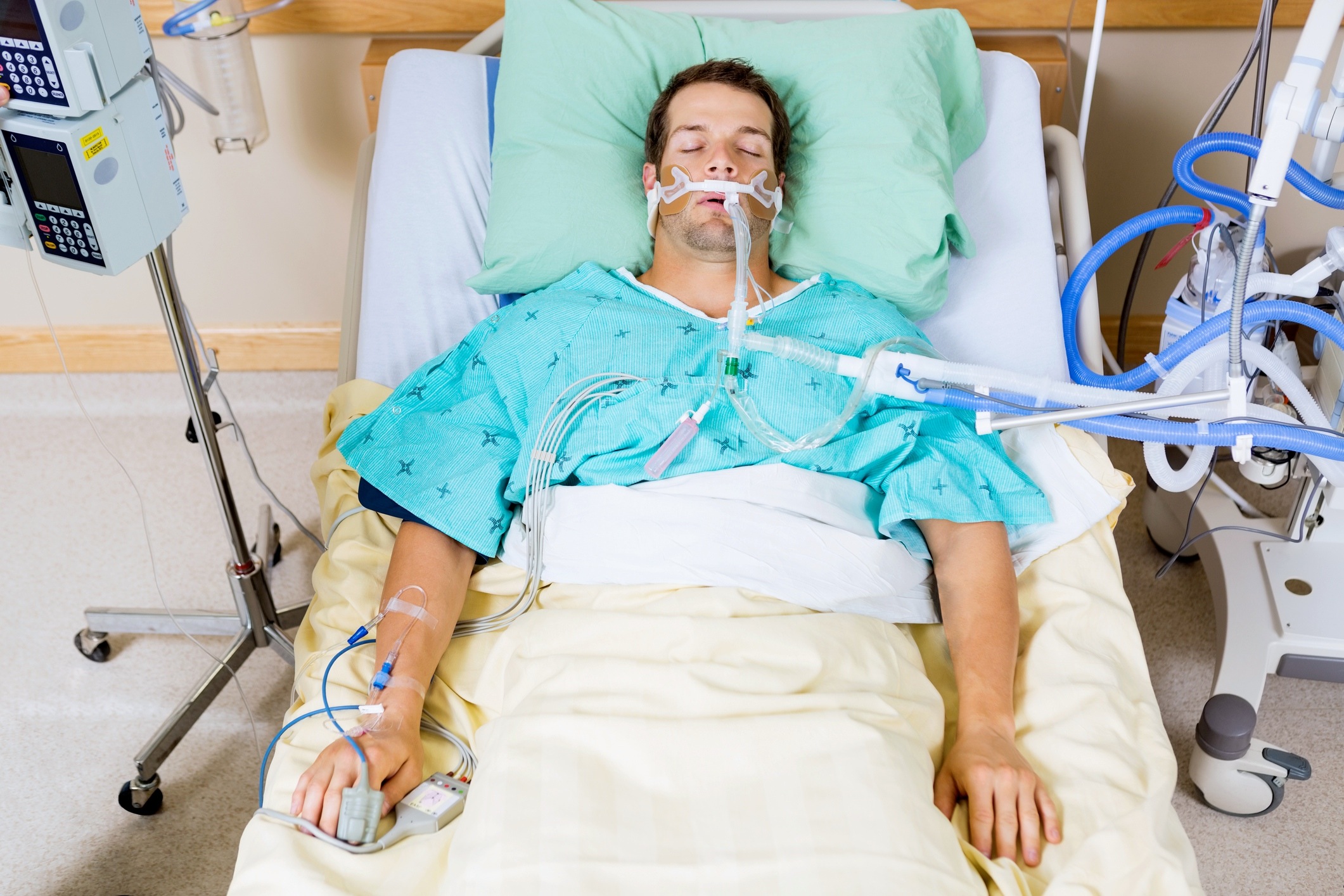
Needless to say, the patients I treat in ICU are all very sick patients. Most of the time, they are intubated, to allow oxygen being delivered to them so that they can breathe better, and easier and thus, relieving their bodies of the fatigue.

Often, we managed to save them.
They recover, extubated and then discharged to the general (normal) ward.
Sometimes they don’t do well, and we need to know when to stop, and when to say “OK, this is it. This is our limit and there is no more we human beings can do”. It is challenging to determine that point. I am always scared that I gave up too early. What if I just need to try a bit more to save him?

Give up? Or try harder?

Often, the line separating surviving from succumbing is grey.
And adding to the complexity - is the life after survival.
One might survive the ordeal but left with disabilities that render him / her dependant on others.
One might get through a severe infection of the lungs but the heart became weak and can't even stand walking to the toilet without feeling breathless.

I would often think - would the patient rather die of the infection or live with permanent disabilities? How can we know? Will the children know?

Jangan menambahkan penderitaan seseorang / tak nak dia menderita lama

So what if we can save the patient, but we know the outcome will not be good? Should we still try all out and get the patient to live - but only having his heart beating but without his brain and muscles functioning well?

And then comes miracle. How sure can I be that no miracle will ever happen?


Families cling to the word miracle like a stranded hiker clinging on her fingernails.
They need it, they desperately hope for a miracle. And I am there, shattering all their hopes.

No, please don't hold your hopes high. You need to understand, your father is not doing well and his heart might give way anytime soon. Please be ready.

Yes, I believe in miracles. But that is specifically why they are called miracles.
They rarely happen. And if they happen, no matter what we did, it will still take place.

ICU is a very specialised and thus, limited place.
Not all patients can be admitted to ICU - we need to choose our patients carefully, those who can benefit the most from an ICU admission and we have our own admission criteria.
Some patients who unfortunately do not meet the admission criteria; will be ventilated in the general wards. And it breaks my heart seeing these patients being outside in the normal ward, and die eventually. I usually hope the families will bring them home, so that they can die at home, surrounded by their family members.
But our society don't really do that.
They'd prefer their parents to die in the hospital, and most of the time, they don't agree to the withdrawal of care. They will agree to at most, limitation-of-therapy.

Every critically ill patients have a story of their own.
They might be healthy and fit last week, but a severe infection of the lungs, or perhaps disseminated infection of bacteria into their spleen and livers, causes them to be incapacitated and fighting for their lives.
Sometimes, it is a motor vehicle accident - injuring their intraabdominal organs, their brain and/or their bones.
Critically ill patients can be any of us in the future.
Have you actually thought about it?
Would you prefer being alive but disabled permanently and relying on your family members or die trying?
Is life, or quality of life more important to you?


p/s: No I am not trying to say people that are already disabled to be better off dead. No no not at all.
It's just so hard to imagine living but not really living. You aren't even yourself anymore.


-Because life is a test-


-AkMaR-
http://nur-akmar.blogspot.com
Sunday, October 27, 2019

Sanggup ke Jaga Tracheostomy?

Assalammualaikum.

I am an Anaest MO. That means I work in both the operating theatre (OT) as well as the Intensive Care Unit (ICU).
Undeniably, the patients in ICU are very critically ill patients - they require intensive care and resuscitation and monitoring to keep them alive, of course dengan izinNya.

Some of these patients sadly, after surviving the most critical part of their illnesses, they don't recover to their previous state.
They might suffer a stroke along the way, or the prolonged acidosis in them have affected a good portion of their brain function permanently, or just in general, became very weak and thus will take a long time to recover. These are the state ICU doctors call "Poor/Slow GCS recovery".
It just mean that their mental state and muscle power takes very long to recover.
And most, if not all of these patients are intubated.

Intubation is a way of delivering oxygen and ventilation to someone through a tube down his/her throat and straight into the lungs. And we can't keep the tube in the throat for long. There are a lot of problems tagging along with a prolonged endotracheal intubation.

An intubated patient. [Source]

So we will usually counsel the family for tracheostomy. Tracheostomy is basically an operation in which the surgeon makes a hole in the front part of the throat/trachea, below the vocal cord and passes a tracheostomy tube through it. The tube is the same size as the endotracheal tube, but it is shorter.
It bypasses the whole chunk of throat muscles - the muscles which a patient needs to control in order to breathe properly, the muscles which a very weak patient might not be able to control.

Tracheostomy Illustration . 


Tracheostomy. [Source]

Living with a tracheostomy is not exactly easy.
It affects not just the patient, but also the family members. More so if the reason the tracheostomy was performed was "Poor GCS recovery"
That means the patient will be almost vegetative, relying on the family members to care for him/her.

Normal people produce phlegm all the time - we then either spit them out or swallow them subconsciously.
But tracheostomi-ed patients can't do that. Coupled with the lack of ability to filter inspired air, patients will produce a lot of sputum especially in the earlier months. Thus family members MUST MUST MUST be able to perform suction of the airway - imagine putting in a smaller tube into the tracheostomy tube and suck all the mucus out. And it definitely is not for the faint-hearted. The patient will cough and gag and the secretions are not going to be clean and white. They are basically phlegm, spit, whatever you want to call it. They are not nice. They are gross.

So frequent suctions need to be done. And the suction is not just once early in the morning, and then once more in the evening when everyone's back from work. The patient's airway will be blocked by then. There need to be a dedicated carer to care for a trachy patient - to perform suction every few hours, more if the secretions are copious. See the commitment we need from family members? See why doctors don't perform a tracheostomy on just anyone?

I have had a few cases where the tracheostomy patient dies at home, some was even almost deliberately killed by their family members. One mother allegedly covers the vegetative son's face with a pillow to end his life. But hey, he wasn't breathing through his mouth nor nose! The son's lifeline was that tracheostomy tube, mom! Please don't ask me what happens to the son and the mother, I don't know. But I know things like these happen. Imagine what kind of frustration must the mother must have felt to try and end her son's life. Perhaps she thinks her son is not even living anymore, just laying there vegetative. Perhaps she thinks it might be better and easier for the son that way.

Tracheostomy is also not an easily reversible decision. There is no turning back.
In intubated patients, when the family and doctors agree, we can withdraw our treatments when we see there is no more that we can do. We can remove the tubes and let nature takes its course.
It is harder to do that once a tracheostomy tube is there. It is hard to withdraw treatment from tracheostomy, as we dont really remove the trachy tube from the body to withdraw treatment.

It always breaks my heart when I need to counsel family members for tracheostomy. Most of these patients are elderly, and the family I counsel are the children.
I need to really knock into them the reality of tracheostomy. Knock knock knock - these are what you signing yourselves for if u agree for tracheostomy. You mother or father will still be lying there, weak and very dependant on you. Tracheostomy is not going to fix it. Tracheostomy is ONLY to deliver the air into them so that they can breathe easier.
It doesn't fix their brains, it doesn't make their hearts stronger, nor will it cure the infection your mother / father might still be having.
And you now have to discuss with your family members - who CAN and who WILL take care of this parent?

Brutal question huh?
If they can't agree on a carer between them, then doctors can't perform the tracheostomy.
Then they might feel they are not trying the best for their parents - they will feel the guilt of not going all out for their parents.
But is tracheostomy really the best though in these patients?
If they DO agree for tracheostomy, but then later are unable to care for their parents, that will be an even greater sin.
The sin of menzalimi mak ayah sendiri. The sin when they let their mother father die drowning in their secretions, because there are no one to care for the parents. The sin of hoping and thinking "Baik lagi mak ayah mati".

But if they can't agree for tracheostomy - it might make them feel like they are giving up on their parents.
Tough, tough question.

Maybe this is the reason why many medical practitioners in the west are tyring to advocate an advanced directive - although it will be very hard to implement and has many loopholes in it.

A quesiotn for you:
Would you want tracheostomy done onto you in the future?


-Because life is a test-

[p/s: The terms in this post is simplified to suit the non-medical readers]

-AkMaR-
http://nur-akmar.blogspot.com
Monday, November 27, 2017

One Heck of an On Call

Assalammualaikum :)
Every month, I do 6 - 7 oncalls.
Ever since I started doing ICU calls in September, my boss gave me more ICU than OT calls to train me.
So this month, I had only one OT call.

Definition:

"ICU call: On Call and is in charge of the ICU for 24 hours.
OT call: On Call and is in charge of the Operating Theatre for 24 hours."

MOs doing OT call will be giving anaesthesia to all the emergency operations of the day. Operations might be done by several surgeons:

Ortho / Surgical / Obs Gynae but there will be only ONE anaesthetist.

And that single OT call of mine was yesterday; 26th Nov.
And it was such a buuusssyyy day, almost like 6 oncalls being combined into one.


I had an ECT (electro-convulsive therapy) in the morning.
Then EMLSCS for poor progress
Then bleeding PP type IV - under GA!
Then bleeding PP type II
Then WD Fornier's Gangrene - sent to ICU
Then EMLSCS for breech in labour
Then EMLSCS for poor progress
Then acute appendicitis.

My OT went on and on non-stop since 9am and it was already 4am by the time I discharge my acute appendicitis patient and I thought I can sleep until Subuh.

But suddenly at 6am, the staff nurse came knocking at my door and screamed "Doctor!! Ada fetal bradyy!!"

I literally jumped out of my bed, struggling to switch the lights on, open the door, take the phone the staff nurse brought me and listening to what the O&G MO has to say, put on my scrubs, put on my tudung, look for my glasses and shoes - all at the same time.

And as I am having active URTI at the moment, my throat was really hurting when I woke up I can't even talk properly.


Why the panic?

Fetal = unborn baby. Brady = slow.
"Fetal Brady" is the term we use to imply unborn babies with slow heart rates. When an unborn baby has slow heart rate, means the baby is in danger. BIG BIG danger and he/she has to be taken out ASAP or the baby might die in utero. See the reason to panic now?

I went out of my oncall room, didn't even care that I have not brushed my teeth or washed my face.
While preparing my GA drugs, I called Shangker breathlessly, asking him to stand by while I induce the patient; either GA or spinal.

When the patient arrived to OT, baby heart rate was 86bpm. Anything less than 110 beats per minute is low for a baby. And so, I had to GA the mother. Giving general anaesthesia to a pregnant woman is one of the things I fear the most in this field.

Anything can go wrong. And any mistake can cause the lives of two human beings and of course, lots and lots of paperwork ahead.

And in the morning, there was a CME session that I had to attend albeit being very tired and was dozing off midway until suddenly Dr R attacked me with a question: "Akmar! Which GABA receptor does Midazolam bind to?"
*criessss*

Nasib baik her mood was good this morning; x kena marah sebab cannot answer.
Finish lah coretan of one of my worst oncall day.

'til then!

-Because life is a test-

-AkMaR-
http://nur-akmar.blogspot.com
Thursday, November 9, 2017

Dah jadi MO daahhh

Assalammualaikum all :)

I have not been fair to this blog, eh?
My last post was in April!

Just a quick update then.

I've managed to successfully completed my dreadful years of housemanship in a tertiary centre in Klang Valley; albeit being extended for two months (bloody Paeds)!
After floating for about 5 weeks in Anaest Dept, I was transferred to a smaller hospital in Johor in April 2017.

This hospital I am working in now is a small hospital; however it is fully equipped with operating theatres and has many departments.
We can usually gauge how established is the hospital by seeing how many departments it have, how many specialists are there in every department and whether it has operation theatres or not.

Alhamdulillah, I was assigned to the Anaesthesiology Department; the department of my choice.
Hubby was placed in the Orthopaedics Dept - which I found out later turns out to be the nemesis of Anaesth dept 💆🏻

Since I was already trained in anaesth for almost 6 months; my tagging period as an Anaest MO was expedited.
I tagged 12 hrs for 2 weeks, followed by about one month 24hrs tagging and then started my solo OT call.


My scariest moment of solo OT call as of now was a cannot intubate, cannot ventilate situation for a cord prolapse EMLSCS patient.
I almost died of heart attack and my hands were shaking throughout the whole operation.
When Dr R came in she shouted and screamed at me for not putting the patient on the ramp position before I attempt intubation.
I was actually quite disappointed on that day because I had two seniors with me in the same OT but no one came to my rescue.
I believe my failed intubation was due to my inexperience.
Thankfully the mother and baby survived.

For those who don't know, "cannot intubate, cannot ventilate" situation is a nightmare for any doctor. We have to declare a crisis in those times. It means at that time, the patient is already not breathing (either because of our drugs or due to ongoing disease) and we cannot secure the airway and help with ventilation.
If the situation prolongs, the oxygen in the patient will slowly be used up and he/she will die of lack-of-oxygen.
It is equivalent to choking someone to death!

Anyway, in August (4 months in the dept) I started tagging in ICU.
After two weeks I finally started my first solo ICU call.


I love doing what I am doing now.
Having said that, I remembered what I wrote during my first month as a house officer - The First Month of Life.
I loved my job back then too :)


-Because life is a test-

-AkMaR-
http://nur-akmar.blogspot.com

Sunday, April 23, 2017

My First CSE

Assalammualaikum

Sorry I've been lazy and not updating my blog as frequently as I wanted to.

Today is a special day.
My first attempt at CSE (Combined Spinal) anaesthesia and I nailed it!

I did it under Dr R's observation and I was extremely nervous.
Thank God my hands did not shake as much as they did when I first attempted spinal anaesthesia under her supervision - she was assessing my competency at that time.

I know this is too much of a jump - I have not talked about my relocation, my current department and all.
I am quiet in a rush now, couldn't afford to write much.

But since today is a special day - my first CSE attempt - hence I feel very compelled to type them out.
Enough to say I am now an Anaesth MO in a small district hospital in Johor.

Yes, Johor.


Hiks.

'til then!


-Because life is a test-


-AkMaR-
http://nur-akmar.blogspot.com
Thursday, March 16, 2017

My first CVL

Assalammualaikum!

It is already very late now - 11.19pm
I have a flight to catch tomorrow morning yeay! I'm going Sarawak for Fatin's wedding :D
Fatin married a BBC - British Born Chinese weewitt

But because today is one of those special days in my career, I decided I need to pen them down (or type, in my case)

So today, I was put on ICU duty, instead of GOT due to the lack of manpower in ICU.
And today also was my first time inserting a Central Venous Line (CVL)!
To non medical people, a CVL is a catheter (maybe "tube" sounds more familiar) that we insert into the body so that the tip of the catheter will lie in a patient's heart.
Yes, heart. The right atrium to be exact.
And we have to be careful to put into the vein, instead of the artery.

So today I inserted a CVL through a patient's internal jugular vein (that is the vein in our neck) - via US technique. 😆 😆

I know the older generations in medical would have laughed that I am so proud with this one CVL - they have inserted numerous during their HO years. I got my first only after I become an MO.

But, so what?
At least I have inserted one.
And this will certainly help me in future :)

So thanks Farid, for guiding me thru the insertion of CVL.
And Danny for being there, as an amateur as well hence I kept telling myself all the mistakes I did, are for me and him to learn 😀 😀

And I dont mind mentioning their names here - they don't even know the existence of this blog.


This is the check xray of the patient. We need this to ensure that the tip of our catheter is
nicely placed in the right atrium, not too low neither too high.
Til then!
Oh and I'll try to blog about my 48hrs Kuching trip :)


-Because life is a test-


 -AkMaR-
 http://nur-akmar.blogspot.com
Thursday, March 9, 2017

Anaesthesia MO

Assalammualaikum.

Today I was scolded, or rather cynically told off by an anaesthetist.
She came in while I was looking at my phone during the surgery.
Perhaps she wasn't pleased with it - but to be fair I wasn't looking at my phone the whole time.
She came during that time I was looking at my phone, answering texts.
My luck.

It was an expected long operation - at least 5 hours.
Hence the anaesthesia practitioner MUST be present and continually monitor the patient.
I WAS monitoring the patient.
But I am still very junior in this field, there are still many things I don't know although I admit I should have studied more these past few weeks.

She then started quizzing me.
How do we calculate the fluids requirement for this patient?
Do I know the difference btw fluid maintenance, fluid deficits and fluid loss?
How do we calculate?
Fortunately, very fortunately, I still have my HO-time notebook in my pocket.
And I could produce a very good well-calculated fluid regimen for her.
She complimented me for it, thank God.
But she wasn't happy that I did not calculate it before she comes in.
Hmm, some of my seniors will always skip this part hence I don't routinely calculate them - perhaps now I have to start practicing the good practice, and not just the routinely done ones.

The next question was on perioperative monitoring.
What do we monitor in long operations?
I could answer but I could not really tell the indications behind it - eg temperature monitoring.
Why is it so pertinent for us to monitor the temperature in a long-standing op?
I know we have to avoid hypothermia, but why?
I know hypothermia reduces metabolic rate and sort of slow down our body, but I can't provide a proper answer for that question.

Well later on I found out that there is this thing called the Lethal Triad: coagulopathy / hypothermia / metabolic acidosis.
Hypothermia leads to coagulopathy and met.acidosis which will in turn aggravate the met.acidosis and coagulopathy.

She then said something about Anaesth is a difficult field, people always think we sit idly during operations, but actually, it is very difficult. She said I should read more, and not just sit down looking at my phone - right to my face.
And she walked off.

I felt so bad.
I felt so guilty
I felt like a disappointment.
My mood was so low the whole day. I did not dare to look her in the eye after that.
She was so nice to every other MOs - perhaps I have not gained her trust.
And from what happened today, it will be harder for me to prove myself.
I do not hate her. I brought this upon myself.

To make things worse, I woke up late this morning and was rushing to work.
Hence I accidentally wore sandals to work - instead of a proper pair of shoes.
And I have to go out to the wards and do pre-operative assessment for patients having their op tomorrow.
That made me feel even less professional - going around the hospital with sandals.
And I left my stethoscope in the car - which really, added salt onto the wound.

So now, I am sitting down and reading about anaesthesia concern on the types of operations I'll be doing tomorrow - the ENT list.

I hope I'll do better tomorrow.
And will regain the confidence I lost this morning.

-Because life is a test-


 -AkMaR-
 http://nur-akmar.blogspot.com